Cognitions Counseling offers Accelerated Resolution Therapy

Car Accidents, Trauma, and Treatment
This post explores the prevalence of Acute Stress Disorder following car accidents, examines why survivors avoid counseling, and highlights the rapid efficacy of specialized trauma therapies like CBT, EMDR, PE, and ART.
Patrick Hull, LISW-CP, LCSW
7/19/20265 min read
Understanding and Treating
Acute Stress After Car Accidents
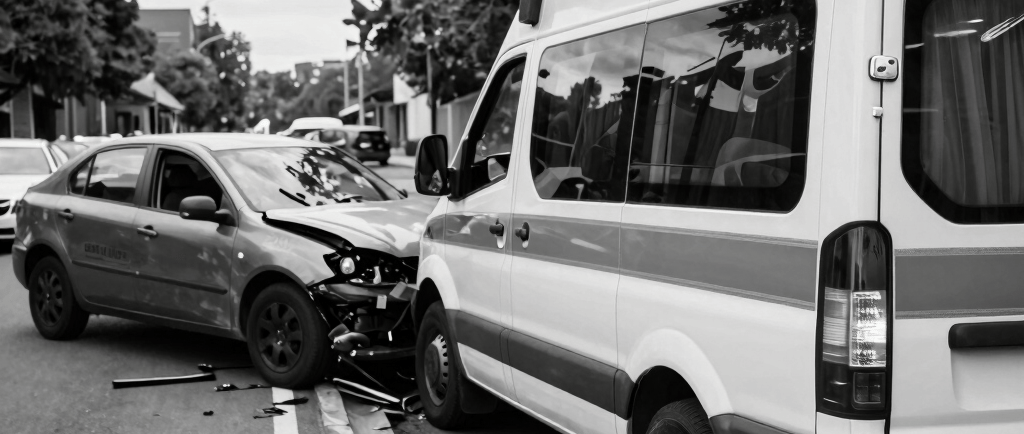
The screech of tires, the crunch of metal, and the sudden, violent shattering of reality—a car accident is over in a matter of seconds, but its psychological aftermath can stall a life for months or even years. When we think of car accidents, our minds naturally gravitate toward the visible damage: broken bones, concussions, and mangled vehicles.
Yet, for many survivors, the most debilitating injuries are the ones hidden from view.
Whether an individual walks away from a non-fatal fender bender with minor bruises, survives a catastrophic multi-car pileup, or loses a loved one in a fatal crash, the psychological impact is profound. A significant portion of car accident survivors develop Acute Stress Disorder (ASD), a severe psychological reaction that occurs in the immediate aftermath of a traumatic event.
Despite the availability of highly effective clinical treatments, a staggering number of survivors suffer in silence, actively avoiding the professional care that could restore their peace of mind.
The Hidden Epidemic: Prevalence of Acute Stress Symptoms
Psychological distress following a motor vehicle accident is not a sign of emotional weakness; it is a neurological baseline reaction to extreme danger. According to data compiled by the American Psychiatric Association and various global health meta-analyses, an estimated 13% to 21% of all car accident survivors develop Acute Stress Disorder (ASD) within the first month following a crash.
When an accident involves a fatality, these statistics surge dramatically. Survivors of fatal accidents do not just grapple with the threat to their own survival; they face the crushing weight of sudden, traumatic bereavement and, quite frequently, survivor's guilt. For these individuals, the risk of developing acute stress symptoms compromises their daily functioning almost entirely, with standard prevalence rates doubling as grief and trauma intertwine.
ASD symptoms are grouped into five distinct categories:
Intrusion Symptoms: Uncontrollable, vivid flashbacks, distressing dreams, or psychological distress when encountering reminders of the crash (such as driving past the accident scene or hearing brake pads squeal).
Negative Mood: A persistent, overwhelming inability to experience positive emotions like happiness, satisfaction, or love.
Dissociative Symptoms: Feeling emotionally numb, experiencing an altered sense of reality (derealization), or being unable to remember crucial details of the accident.
Avoidance Symptoms: Going to extreme lengths to avoid thoughts, feelings, or external reminders (like refusing to get back into a car) associated with the event.
Arousal Symptoms: Hypervigilance, an exaggerated startle response, irritability, and severe sleep disturbances.
If these symptoms persist beyond 30 days, the diagnosis formally transitions from Acute Stress Disorder to Post-Traumatic Stress Disorder (PTSD).
The Avoidance Paradox: Why Survivors Don’t Seek Counseling
1. The Symptom of Avoidance Itself
The primary reason trauma survivors avoid counseling is that avoidance is a core diagnostic feature of the trauma itself. To sit in a therapist’s office and discuss the accident requires the survivor to confront the exact memories, images, and physical sensations they are desperately trying to suppress. For someone experiencing high arousal symptoms, the prospect of "reliving" the event in therapy feels dangerous, threatening to trigger a full-blown panic attack.
2. The Illusion of "Toughening It Out"
Many survivors minimize their own trauma, especially in non-fatal accidents. They tell themselves, "I wasn't seriously hurt, so I should be fine," or "It was just a fender bender, I'm overreacting." Societal expectations often push individuals to suppress their emotions, treating psychological distress as a temporary phase that will fade with time.
3. Logistic and Financial Overwhelm
In the wake of a serious accident, a survivor's mental bandwidth is often consumed by systemic demands. Dealing with health insurance, managing physical therapy, arranging vehicle repairs, navigating legal claims, or organizing a funeral leaves very little emotional energy for mental health care. Counseling is frequently pushed to the bottom of the priority list.
Rewiring the Brain: The Efficacy of
Specialized Counseling
Standard talk therapy can be helpful for general stress, but processing an acute shock to the nervous system requires specialized, trauma-focused modalities. Four distinct treatments stand out for their exceptional track records in resolving accident-related trauma.
1. Trauma-Focused Cognitive Behavioral Therapy (CBT)
CBT is the traditional gold standard for trauma recovery. It focuses on the intersection of thoughts, feelings, and behaviors. Following a car accident, a survivor may develop cognitive distortions, such as "If I drive, I will definitely get into another fatal crash."
A CBT therapist helps the client identify these unhelpful, fear-driven thought patterns, challenge their validity, and gradually replace them with balanced perspectives. CBT also introduces somatic relaxation techniques to help manage physical anxiety when the body goes into a fight-or-flight state.
Initial improvements typically manifest within 6 to 8 weeks, with standard treatment protocols wrapping up within 12 to 16 weeks.
2. Prolonged Exposure (PE)
EMDR is a non-traditional, highly effective therapy based on the premise that traumatic memories become "stuck" in the brain's right hemisphere, isolated from cognitive processing.
During EMDR, the therapist guides the client to hold a disturbing image of the accident in their mind while introducing bilateral stimulation, usually via lateral eye movements, rhythmic tapping, or auditory tones. This bilateral stimulation mimics the natural processing mechanics of REM sleep. EMDR allows the brain to reprocess the traumatic event, stripping away the intense emotional and physical charge. The memory remains, but the visceral panic vanishes.
Survivors generally notice significant structural relief within 4 to 8 sessions, though more complex cases involving fatalities or historical trauma may take longer.
3. Eye Movement Desensitization and Reprocessing (EMDR)
Imaginal Exposure: The client repeatedly describes the accident in the present tense during sessions, helping the brain digest the memory until it no longer triggers an overwhelming emotional spike.
In Vivo Exposure: The client gradually confronts real-world reminders outside of session—such as sitting in a stationary car, then driving in a quiet parking lot, and eventually returning to highway driving.BT is the traditional gold standard for trauma recovery. It focuses on the intersection of thoughts, feelings, and behaviors. Following a car accident, a survivor may develop cognitive distortions, such as "If I drive, I will definitely get into another fatal crash."
Initial improvements typically manifest within 6 to 8 weeks, with standard treatment protocols wrapping up within 12 to 16 weeks.
4. Accelerated Resolution Therapy (ART)
Developed as an evolution of eye-movement therapies, Accelerated Resolution Therapy (ART) is gaining rapid recognition for its extraordinary speed and efficacy. Like EMDR, ART utilizes bilateral eye movements. However, ART is highly procedural and incorporates a unique technique known as Voluntary Image Replacement.MDR is a non-traditional, highly effective therapy based on the premise that traumatic memories become "stuck" in the brain's right hemisphere, isolated from cognitive processing.
Crucially, ART does not require the survivor to verbally recount the horrific details of the accident to the therapist, which dramatically reduces the emotional friction of attending a session.
Improvement is exceptionally rapid. Most clients report a profound reduction in physical distress and memory intensity within 1 to 5 sessions, with an average of less than 4 sessions to achieve total resolution. Many note a difference after the very first session.