Cognitions Counseling offers Accelerated Resolution Therapy


Effective Anxiety Treatment with CBT in Fort Mill, SC or Online via Telehealth.
Effective anxiety relief through trusted Cognitive Behavioral Therapy.
Is It Normal Anxiety or Am I Living with an Anxious Brain?

Anxiety: What happens and what helps?
DID YOU KNOW that even though the basic feeling of fear is the same for many creatures, humans are unique. We are the only species that can worry about events in the far future or feel anxious about abstract thoughts.
Feeling Anxious IS Normal and is usually a temporary emotion. This typical form of anxiety is like living in a home with a properly functioning smoke detector: the alarm sounds when it detects enough smoke to warn you that some action is needed to address the issue. Normal anxiety can motivate one to study for a test or practice proposing to your girlfriend.
The Anxious Brain, on the other hand, is a chronic state, as if someone is living in a home with an overly sensitive smoke detector that goes off constantly from slight fluctuations in temperature. The symptoms of anxiety remain even when you are safe, creating a ripple effect that disrupts sleep, work, and relationships.
The American Psychiatric Association acknowledged estimates that about 30% of people may experience a diagnosable issue with anxiety at some point in their lives.


Counseling can help improve the negative THOUGHTS that increase your anxiety.
These negative thoughts are referred to as Cognitive Distortions and are remarkably consistent patterns across the most common disorders of anxiety.
Here are some, but not all, of the different unhelpful, distorted thoughts we may come to believe:
Catastrophizing: Expecting the worst possible outcome.
Overestimation of Threat: Viewing a situation as far more dangerous than it is.
Difficulty Concentrating: The "mental noise" of anxiety often manifests as brain fog or the inability to focus on anything other than the source of the worry.
Musculoskeletal: Significant muscle tension, trembling, or shaking.
Gastrointestinal: Nausea, abdominal distress, or "butterflies."
Autonomic: Sweating, chills, or hot flashes.
Sleep Disturbance: Anxiety frequently interferes with the ability to fall or stay asleep (insomnia), or results in restless, non-restorative sleep, often fueled by racing thoughts at night.
Irritability and Restlessness: Many people with these disorders report feeling "keyed up," on edge, or easily irritated, which is often a secondary result of the chronic physical and mental strain of living with persistent anxiety.
Sense of Impending Doom: A pervasive feeling that "something bad is going to happen" is a frequent psychological symptom that bridges GAD, Panic Disorder, and Separation Anxiety.
Shared Core Symptoms Across Anxiety Disorders
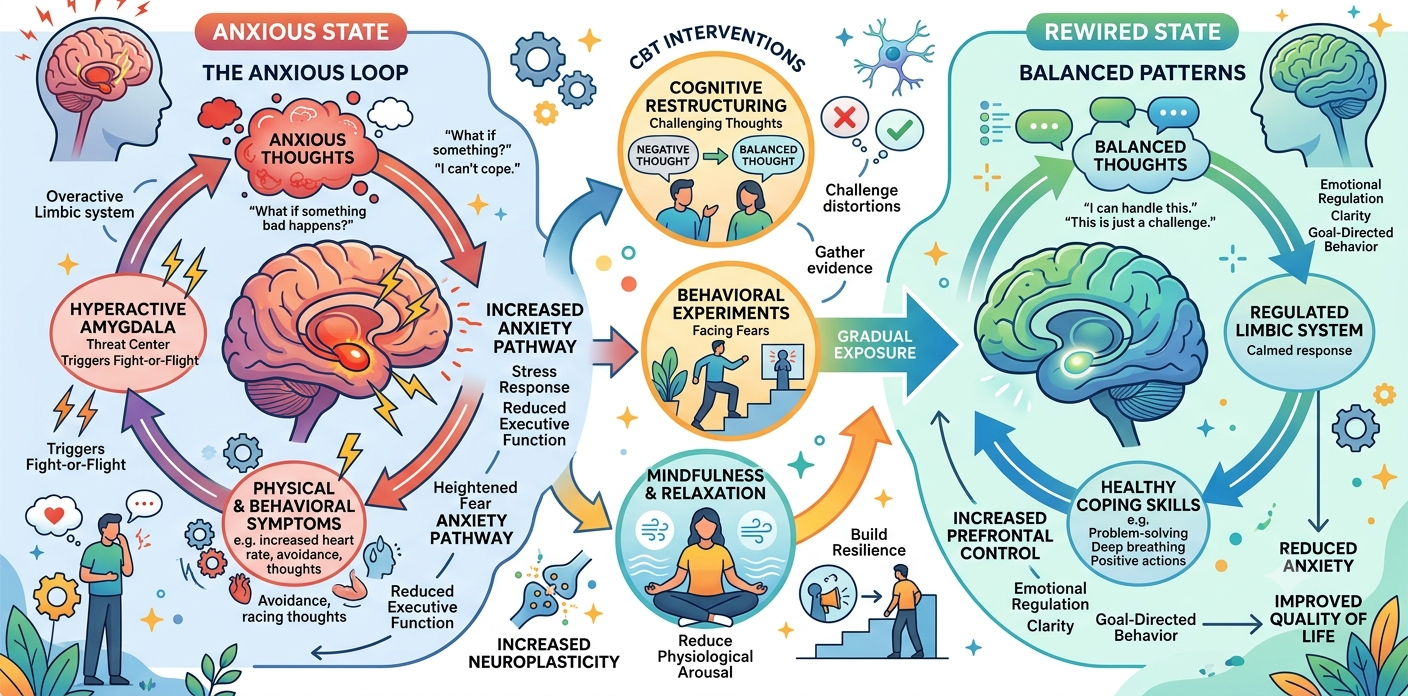
Excessive, Uncontrollable Fear or Worry: Regardless of the specific diagnosis, the hallmark is an experience of fear or apprehension that is disproportionate to the actual level of threat. This worry is often persistent and feels "stuck," making it difficult for the individual to function or focus on daily life.
Avoidance Behaviors: A defining behavioral feature across all these conditions is the urge to avoid the trigger—whether that is a social gathering, a specific object, an attachment figure, or situations where a panic attack might occur. Avoidance provides short-term relief but reinforces the anxiety in the long term.
Physiological Hyperarousal: The "fight-or-flight" response is activated in all these disorders, leading to common physical sensations:
Cardiovascular: Pounding, racing heart or palpitations.
Respiratory: Shortness of breath or rapid breathing (hyperventilation).